
How to Choose a Political Voice Actor Who Understands Campaigns, Not Just Scripts
If you’ve ever worked on a political campaign, you know the clock is always ticking.
One week you’re introducing a candidate to voters. The next week you’re responding to an attack ad, announcing an endorsement, asking supporters for donations before a reporting deadline, or trying to get volunteers out knocking on doors before early voting begins. Every day brings a new challenge, and every piece of communication has a job to do.
That’s one of the reasons I’ve always enjoyed political work.
Long before I became a full-time voice actor, I spent decades producing commercials, corporate communications, and political media. I learned very quickly that campaigns don’t have the luxury of endless meetings or perfect conditions. They have deadlines that can’t move, budgets that always seem too small, and one opportunity to earn a voter’s trust before Election Day arrives.
Those realities haven’t changed.
What has changed is how campaigns communicate.
A Political Commercial Isn’t Selling a Product
People sometimes think political advertising is just another form of commercial advertising.
I don’t see it that way.
A car commercial wants you to visit a dealership.
A restaurant commercial wants you to stop in for dinner.
Political advertising is asking people to make a much bigger decision. It might be asking them to trust someone they’ve never met, support an issue they haven’t thought much about, or believe that one candidate is better prepared to solve a problem than another.
That’s a very different conversation.
The voice behind that message has to feel authentic because voters are remarkably good at recognizing when something feels forced or overly dramatic. In my experience, the strongest political reads aren’t necessarily the loudest or the toughest sounding. They’re believable.
Every Political Script Has a Different Job
One of the advantages of spending years producing political media is that you begin to recognize what each script is trying to accomplish before anyone explains it.
Some scripts introduce a candidate and establish credibility. Others are designed to motivate supporters to vote, volunteer, or contribute financially. Some focus on a single issue that’s important to a community, while others draw clear distinctions between two candidates without ever raising their voice.
Those differences matter because they change the way a script should be read.
A fundraising appeal shouldn’t sound like an election night thank-you message. A positive candidate introduction shouldn’t feel like an attack ad, and a volunteer recruitment video needs a completely different energy than a television commercial introducing a constitutional amendment.
Before I record, I like understanding three things.
- Who are we talking to?
- What do we hope they do after hearing this message?
- Why should they care?
Once those answers are clear, the performance usually takes care of itself because there’s a real purpose behind every line.
One Lesson I Learned Had Nothing To Do With Voiceover
One of the experiences I’m proudest of during my political career didn’t involve a microphone at all.
It involved helping people register to vote.
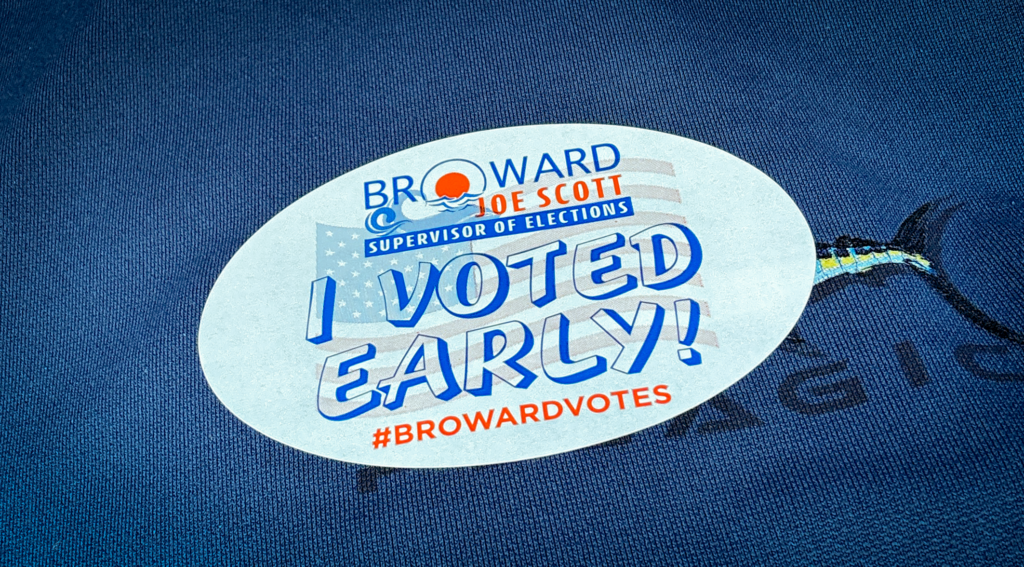
During one presidential campaign, I organized a series of voter registration events throughout the community and worked with the local Supervisor of Elections to have official registrars available after business hours. Instead of asking people to find time during their workday to visit a government office, we brought the process directly into neighborhoods where people already lived.
What made those events meaningful was that they weren’t about registering people from one political party.
They were about participation.
We wanted people to understand the process, ask questions, spend time with their neighbors, and leave registered to vote if they weren’t already.
By the end of that election cycle, those efforts helped register more than 14,000 voters.
That experience has stayed with me because it reminded me that every campaign begins with people. Before anyone donates, volunteers, or votes, they first have to care enough to engage. Good political communication doesn’t create that interest by itself, but it certainly helps build it.
Understanding the Pressure Behind the Campaign
One advantage I bring to political voiceover has very little to do with my voice.
It comes from spending decades working alongside producers, agencies, media consultants, editors, and campaign teams. I’ve been in enough production meetings to understand that the recording session is usually the easy part. The difficult work happened long before the script reached the microphone.
Campaign managers have already debated strategy.
Media consultants have studied polling.
Writers have rewritten the script more times than anyone can remember.
Editors are waiting on audio.
Media buyers have deadlines.
Everyone is working toward the same goal, and there isn’t much extra time to spare.
Because I’ve lived in that production world for nearly five decades, I don’t need someone to explain why the script changed five minutes before we’re scheduled to record. I understand why campaigns pivot. New information becomes available. An opponent launches a new commercial. Polling identifies a different opportunity. That’s simply the nature of political communication.
Rather than becoming another moving part that needs to be managed, my goal is to make the process easier. The campaign already has enough challenges. Your voice actor shouldn’t be one of them.
Collaboration Produces Better Political Advertising
Political advertising has never been a one-person effort.
The best campaigns are built by teams. Campaign managers, consultants, producers, editors, writers, and creative directors all bring a different perspective, and somewhere in the middle of those conversations is where the strongest work usually emerges.
That’s one reason I genuinely enjoy live-directed recording sessions.
Whether we’re connected through Source-Connect, Zoom, Microsoft Teams, Google Meet, or another platform, everyone has an opportunity to hear the read, offer suggestions, and make adjustments while we’re together. Sometimes a producer wants a little more urgency. Other times the campaign wants the message to sound calmer, more reassuring, or more conversational.
None of that bothers me.
I’ve spent my career collaborating with creative professionals, and I know the objective isn’t proving that my first take was perfect. The objective is helping the campaign communicate its message as effectively as possible.
If we discover something better on take three than we found on take one, that’s a successful session.
Politics Is About People
After all these years, that’s probably the biggest lesson politics has taught me.
Campaigns aren’t really about thirty-second commercials, direct mail pieces, fundraising emails, or social media videos.
Those are simply tools.
At the heart of every campaign are people trying to make decisions about their communities, their businesses, their families, and their future. Whether someone agrees with a candidate or not, campaigns are ultimately conversations with voters, and the most effective communication usually sounds honest rather than theatrical.
I think that’s one reason more campaigns have moved away from the booming announcer style that was common years ago. Voters today expect authenticity. They want to feel like someone is talking with them, not at them.
That’s exactly how I approach political voiceover.
Choosing the Right Political Voice Actor
If you’re evaluating voice talent for your next campaign, I think it’s worth looking beyond the demo.
Ask yourself a few practical questions.
Has this person worked under real political deadlines?
Do they understand how campaigns actually operate?
Will they take direction well during a live session?
Can they deliver broadcast-quality audio quickly if the script changes at the last minute?
Most importantly, will they make my job easier?
Those answers often tell you far more than whether someone has a deep voice or an impressive client list.
Final Thoughts
I’ve been fortunate to work in political media from several different perspectives, first as a producer and director, and now as a professional voice actor. That experience has given me an appreciation for the people behind every campaign and the enormous amount of work that goes into communicating a message clearly and honestly.
Campaigns move quickly, expectations are high, and deadlines don’t wait.
If you’re looking for a political voice actor who understands both the creative side and the realities of running a campaign, I’d welcome the opportunity to learn more about your project and help your team communicate with confidence.
About the Author
Robert Starling is a professional American voice actor, producer, cinematographer, director, campaign operative and life-long political junkie with nearly 48 years of award-winning campaign production experience. Based in Lighthouse Point, Florida, he provides lightning-fast, same-day, broadcast-quality voice over services for clients and campaigns nationwide from his professional studio. Live-directed sessions are available via Source-Connect, Zoom, Microsoft Teams, and Google Meet.