
How to Find the Right Corporate Narrator for Your Company Videos
I’ve spent nearly five decades producing corporate videos, and if there’s one thing that has surprised me over the years, it’s how often the narration becomes an afterthought.
A company might spend months planning a new product launch, a recruiting campaign, or an executive presentation. The script gets reviewed over and over again. The visuals are refined. Music is selected. Graphics are polished.
Then, somewhere near the end of the project, someone says, “Now we need a voice.”
I’ve always thought that was a little backwards because the narrator is often the only person speaking directly to your audience. They’re the one carrying your message from beginning to end. If they connect with the audience, the entire video feels stronger. If they don’t, even beautiful visuals can struggle to hold someone’s attention.
That’s why I believe choosing a corporate narrator deserves more thought than simply finding a pleasant voice.
You’re Really Hiring a Communicator
One of the biggest misconceptions about corporate narration is that companies are shopping for “the perfect voice.”
In my experience, that’s rarely what they’re actually looking for.
What they’re really looking for is someone who can communicate their message in a way that feels natural, authentic, and believable. The voice matters, of course, but it’s only part of the equation.
I’ve learned that the better question isn’t, “Who has the deepest voice?” or “Who sounds the most polished?”
The better question is, “Who understands what we’re trying to accomplish?”
There’s a big difference between reading a script and helping tell a story.
When someone finishes watching your corporate video, you don’t want them saying, “That narrator had a great voice.”
You want them talking about your company, your people, your product, or your mission.
The narrator should support the message, not compete with it.
Every Audience Is Listening for Something Different
One of the first questions I ask before recording is incredibly simple.
Who is this video for?
It sounds obvious, but the answer changes almost everything.
A recruiting video has a completely different job than an investor presentation. A message from the CEO shouldn’t sound like a product launch, and an onboarding video shouldn’t sound like a customer testimonial.
Over the years I’ve worked on recruiting videos, executive messaging, annual meetings, product launches, internal communications, training programs, and corporate culture pieces. Although they all fall under the umbrella of corporate narration, they’re really very different conversations.
If I’m speaking to someone considering a job with your company, the narration should feel welcoming and optimistic. It should help them picture themselves becoming part of your organization.
If the audience is current employees, the goal might be very different. Maybe leadership is explaining a new initiative, celebrating success, or helping everyone understand where the company is headed. That calls for confidence and clarity, not excitement for the sake of excitement.
Investors and board members have another perspective entirely. They’re listening for vision, leadership, stability, and long-term thinking. They want confidence, but they also expect professionalism and credibility.
Then there are customers, distributors, franchisees, and sales teams. Each group brings different expectations, different questions, and different reasons for watching your video.
The narration should recognize those differences.
That’s one reason I spend time asking questions before I ever step into the booth. Understanding the audience almost always leads to a better performance because you’re no longer reading words. You’re having a conversation with a specific group of people.
Storytelling Is Still What People Remember
Early in my career I thought corporate videos were mostly about sharing information.
Experience taught me otherwise.
People rarely remember facts by themselves.
They remember stories.
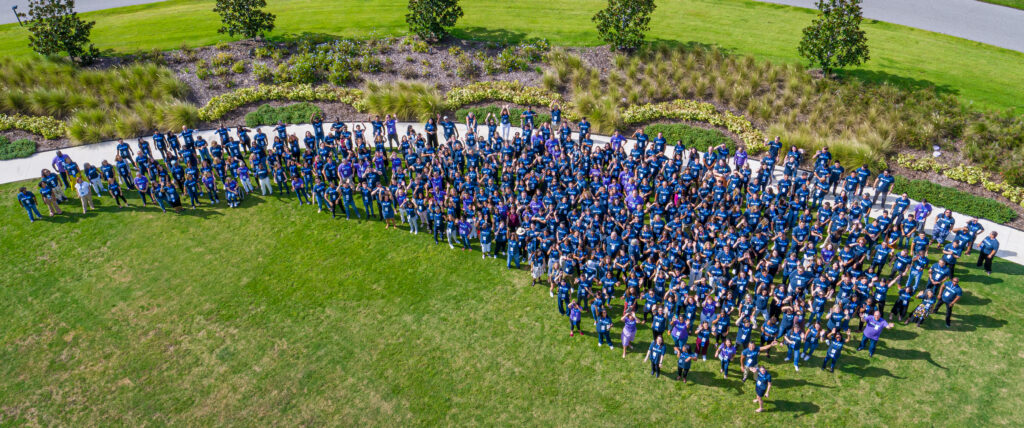
One of the best examples I’ve experienced is my long relationship with KPMG and a project called Lakehouse in Orlando.
When we first became involved, it would have been easy to focus on the obvious. The campus is beautiful. It’s enormous. The architecture is impressive. There are meeting spaces, restaurants, recreational areas, and even a hotel.
But after spending time there, I realized none of those things were really the story.
The story was what happened inside those buildings.
Lakehouse was created to bring together employees, executives, recruits, and clients in an environment designed around learning, collaboration, and culture. Every time we returned to document the project, that’s what stood out. The buildings supported the mission, but the mission was always about people.
That experience reinforced something I’ve carried into every corporate narration project since.
The best corporate videos don’t simply explain what a company does.
They help people understand who the company is.
Another Lesson Came from Toyota
One of the projects that’s been especially meaningful to me over the years has been working with Southeast Toyota Distributors and JM Family Enterprises on the annual Florida Black Achievers program.
At first glance, you might assume those productions are about Toyota.
They’re really not.
They’re about the people.
Each year we have the privilege of interviewing remarkable individuals from all walks of life. Teachers, physicians, entrepreneurs, ministers, community leaders, and countless others who have made a lasting difference in their communities. Every one of them has a story that’s inspiring in its own way, and our responsibility is to help tell that story honestly.
I enjoy interviews because I always come away having learned something. Sometimes it’s a lesson in perseverance. Sometimes it’s leadership. Sometimes it’s simply hearing how one person chose to make life better for the people around them.
What struck me over the years is that Toyota never tried to make itself the hero of those stories.
Instead, the company gave these remarkable people a platform to share their experiences and celebrate their accomplishments. Ironically, by putting the spotlight on others, Toyota communicated far more about its own culture and values than it ever could have by talking about itself.
That’s a lesson I think applies to almost every corporate video.
Your audience doesn’t want to be sold.
They want to understand who you are, what you believe, and why they should trust you.
Good storytelling accomplishes that naturally.
The Working Relationship Matters More Than You Think
If you’ve hired voice actors before, you’ve probably noticed that demo reels only tell part of the story.
The real experience begins after you decide who to hire.
Are they responsive?
Can they take direction without making every adjustment feel like a negotiation?
Do they ask thoughtful questions?
Do they meet deadlines?
Do they understand how your production process works?
Those are the things clients remember long after the recording session is over.
Most of my corporate narration sessions are live-directed using Source-Connect, Zoom, Microsoft Teams, Google Meet, or whatever platform works best for the client. I actually enjoy those sessions because they feel much more like collaboration than performance.
Sometimes a producer wants to slow down a sentence. Sometimes the marketing manager decides a particular phrase needs a little more warmth. Occasionally an executive hears the narration against the finished video and realizes they’d like a different emphasis.
That’s all part of the process.
My job isn’t to defend my first read.
My job is to help the client get exactly what they’re envisioned from the beginning.
Preparation also plays a bigger role than most people realize. Before recording, I usually spend time researching company names, technical terminology, medical language, executive names, or anything else that could become a stumbling block during the session. Those extra thirty minutes of preparation often save everyone much more time later.
What About AI?
It’s impossible to talk about corporate narration today without mentioning AI.
The technology continues to improve, and I think it absolutely has legitimate uses.
If you’re creating an internal draft or a temporary placeholder track while a video is still being edited, AI can be a useful tool.
But I’ve also had several clients come to me after trying AI narration first.
Their comments were surprisingly consistent.
It wasn’t that the AI sounded terrible.
It simply didn’t hold people’s attention.
The longer the narration continued, the more listeners became aware they were listening to a computer rather than a person.
Corporate communication often asks viewers to stay engaged for several minutes. Maybe they’re learning a new process. Maybe they’re being introduced to a new initiative. Maybe they’re deciding whether they want to work for your company or invest in it.
Those situations require more than perfect pronunciation.
They require judgment.
They require pacing.
They require knowing when to add energy, when to pull back, and when to simply let an important idea breathe for a moment.
Those are still very human decisions.
Five Questions Worth Asking Before You Hire a Corporate Narrator
Whether you ultimately choose me or someone else, I’d encourage you to ask a few questions before making your decision.
- Has this narrator worked with organizations similar to ours?
- Do they spend time learning about our audience and objectives before recording?
- Can we direct the session live if we’d like to?
- Will they deliver professionally edited files that fit our production workflow?
- Do they sound like someone we’d enjoy working with again six months from now?
That last question may be the most important one of all.
Corporate narration is rarely a one-time project. Companies continue to grow, introduce new products, recruit employees, launch initiatives, and communicate with customers. Finding someone who becomes a trusted part of that process is often far more valuable than finding the lowest price.
Final Thoughts
After spending nearly five decades producing corporate videos, I’ve come to believe that the best narrators aren’t the ones trying to impress people with their voice.
They’re the ones helping organizations communicate more effectively.
When I start a new project, I’m not thinking about how I can make the narration sound impressive.
I’m thinking about your audience.
Who are they?
Why are they watching?
What do you want them to take away after the video is over?
Answer those questions well, and the narration usually takes care of itself.
If you’re looking for a corporate narrator for your next recruiting video, executive message, training program, company overview, or internal communications project, I hope these ideas help you make a more informed decision. And if you’d like to talk about your project, I’d be happy to learn more about your organization and the story you’re trying to tell.
About the Author
Robert Starling is a professional American voice actor and former commercial producer/director with nearly 48 years of production experience. Based in Lighthouse Point, Florida, he provides broadcast-quality voiceover services for clients nationwide from his professional studio. Live-directed sessions are available via Source-Connect, Zoom, Microsoft Teams, and Google Meet.